Umbrella Insurance for Seniors With Savings
Umbrella insurance is a separate policy that adds extra liability protection once your car and home insurance limits run out.
What it pays for
Covers
- Liability above your auto limits If a crash judgment or settlement goes past what your car policy pays, the umbrella policy covers the rest up to its own limit.
- Liability above your home limits The same extra layer applies if someone is hurt on your property and the claim exceeds your homeowners liability coverage.
- Legal defense costs If you're sued over an accident, the umbrella policy can pay for lawyers and court costs, often separate from its payout limit.
- Claims involving a rental car If you cause serious harm while driving a rental and liability claims exceed your auto policy, the umbrella can step in.
- Some claims your other policies deny Umbrella policies sometimes cover certain liability claims, like slander or false arrest, that auto and home policies leave out.
Doesn't cover
- Damage to your own car This isn't a repair coverage. Collision or comprehensive on your auto policy handles damage to your own vehicle.
- Your own injuries Medical payments or personal injury protection on your auto policy covers you, not the umbrella policy.
- Everyday fender benders Umbrella coverage only begins after your underlying auto or home liability limits are used up, so small claims never reach it.
- Intentional acts If you cause harm on purpose, the umbrella policy won't pay, the same as any liability coverage.
- Business losses Umbrella policies are built around personal liability, so claims tied to a business you run usually need their own coverage.
Worth having if you have savings or property a lawsuit could reach
The decision has almost nothing to do with the car and everything to do with what you own. If a crash left you liable for more than your auto policy's limit, the person suing you can go after your savings, your house, even future income. Umbrella insurance exists to stand between that lawsuit and the rest of your life.
The math changes as your assets grow. Someone renting an apartment with modest savings has less exposed and may not need it. Someone who owns a paid-off home, has retirement accounts, and still drives regularly has real assets a judgment could reach, and that's exactly the situation this coverage is built for.
How much you drive still matters, just less than you'd think. Driving less lowers your odds of causing a serious accident, but it doesn't bring them to zero, and a single bad crash is what this coverage is for. A long highway commute raises the odds somewhat, but even occasional local driving carries enough risk that most people with real savings still carry it.
Where you live factors in too, since a crowded city or a busy state highway means more opportunities for a serious accident than a quiet rural road. If you drive rarely and have modest savings with little else at stake, you can reasonably decide the extra layer isn't worth paying for. If you have more to protect, most people in that position keep it.

How a claim actually moves
An umbrella policy doesn't pay first. Your auto liability coverage has to be used up before the umbrella policy contributes anything, so a claim typically starts the same way any auto claim does, through your car insurer.
If the claim grows large enough that your auto limits run out, your umbrella insurer gets involved, usually review the same accident report, medical records, and legal filings your auto insurer already has. You may be asked for the same documentation twice since the two policies are separate contracts.
The payout covers the liability claim itself, meaning what you owe the other person for their injuries, damages, or losses, plus legal defense in many cases. It won't reimburse you for your own vehicle damage or your own medical bills, since those are handled elsewhere.
Keep your auto and home policy declarations pages somewhere easy to find, since your umbrella insurer will want to confirm your underlying limits meet whatever minimum they require to keep the umbrella policy active.
Umbrella insurance compared to higher auto liability limits
Umbrella insurance
This is a separate policy that sits above both your auto and home liability coverage. It protects a broader range of assets and situations, but it only activates once your underlying policies are exhausted.
Higher auto liability limits
This means raising the liability limits on your existing car insurance policy itself. It only applies to auto claims, but it pays from the first dollar without needing a separate policy or a minimum underlying limit.
If you have assets beyond your car, like a home or savings, lean toward umbrella coverage; if driving is your only real liability exposure, raising your auto limits alone may be enough.
Real situations
You're pulling out of a grocery store parking lot and misjudge the distance, causing a crash that seriously injures another driver who later sues you.
If the settlement exceeds your auto liability limit, the umbrella policy pays the remaining amount up to its own limit.
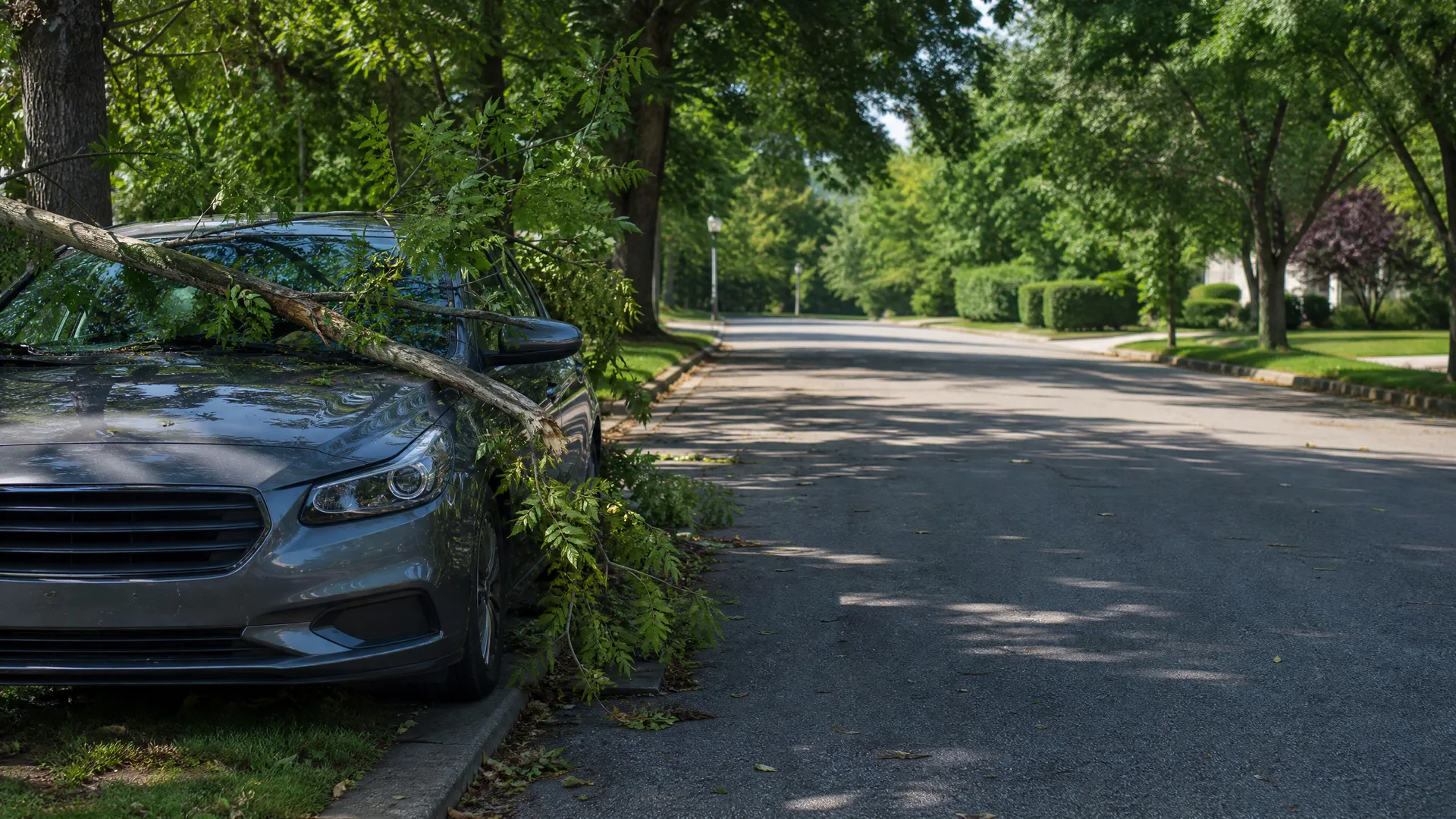
A hailstorm hits while your car is parked at church and leaves dents across the hood and roof.
This doesn't pay, since it only covers liability claims, not damage to your own vehicle, which comprehensive coverage would handle instead.
A deer runs into the road at dusk and you swerve, clipping another car and injuring its driver, who then sues you for lost wages and medical costs.
If the claim goes beyond your auto policy's liability limit, the umbrella policy picks up the rest, since this is a liability claim against you.
Once you know whether your assets call for this extra layer, you can compare quotes with that decision already settled.
Questions people ask about this
How much umbrella coverage do I actually need?
It depends on what you have to protect, not on any fixed formula. A common approach is to add up the value of your savings, investments, and home equity, then choose a limit that covers a meaningful share of that total. Many people choose a round limit that feels proportional to their net worth, then adjust it as savings grow or shrink.
Does umbrella insurance require a minimum auto liability limit?
Yes, most umbrella policies require your underlying auto and home liability limits to meet a minimum before they'll issue the policy. This requirement varies by insurer, so check your policy or ask your agent what minimum applies to you. If your current limits fall short, you may need to raise them first.
Can I get umbrella insurance without owning a home?
Yes, umbrella insurance isn't tied to homeownership, though renters typically pair it with renters insurance instead of a homeowners policy. What matters to the insurer is that you carry adequate underlying liability coverage on your auto and renters or homeowners policy, not which one you have.
Does umbrella insurance cover my adult children living with me?
Often yes, if they're listed as residents of your household and drivers on your auto policy, but this varies by insurer and policy. Check your policy's definition of who counts as an insured person, since some require children to be full-time residents or dependents to be covered.
Will my umbrella insurance rate go up if I file a claim?
It can, though the effect is usually smaller than what happens to your auto policy after a claim. Because umbrella claims tend to be large and infrequent, insurers weigh them carefully when your policy renews. Ask your agent how your specific insurer handles rate changes after a claim is paid.